[Text written in September 2025]
[Text originally in Portuguese]
To be honest, there was a time when I had a mind that did not know how to react to certain corners of reality being portrayed in films. Depending on the subject, they could not be like tattoos and live apart from reason; some subjects simply are not ornaments for stories. But above that, I thought they should not even be portrayed. I did not think you needed to see a rape scene, for example — the subject’s capacity to become graphic always seemed too extreme to me, and made with the sole intention of shocking the audience, equalizing a scene of abuse with a horror movie jumpscare in matters of substantive and symbolic quality. The subject becomes even more complicated when we also portray pedophilia, because now child actors will generally be involved in the process of conveying its message, which stumbles along a tightrope without any guarantee of becoming effective or necessary. To the instruments that conduct a story, even if it possesses no message at all, even if it is guttural and violent and human, there is no room for the artists’ bloody hands to hide when we find the dead body of their sensibilities.
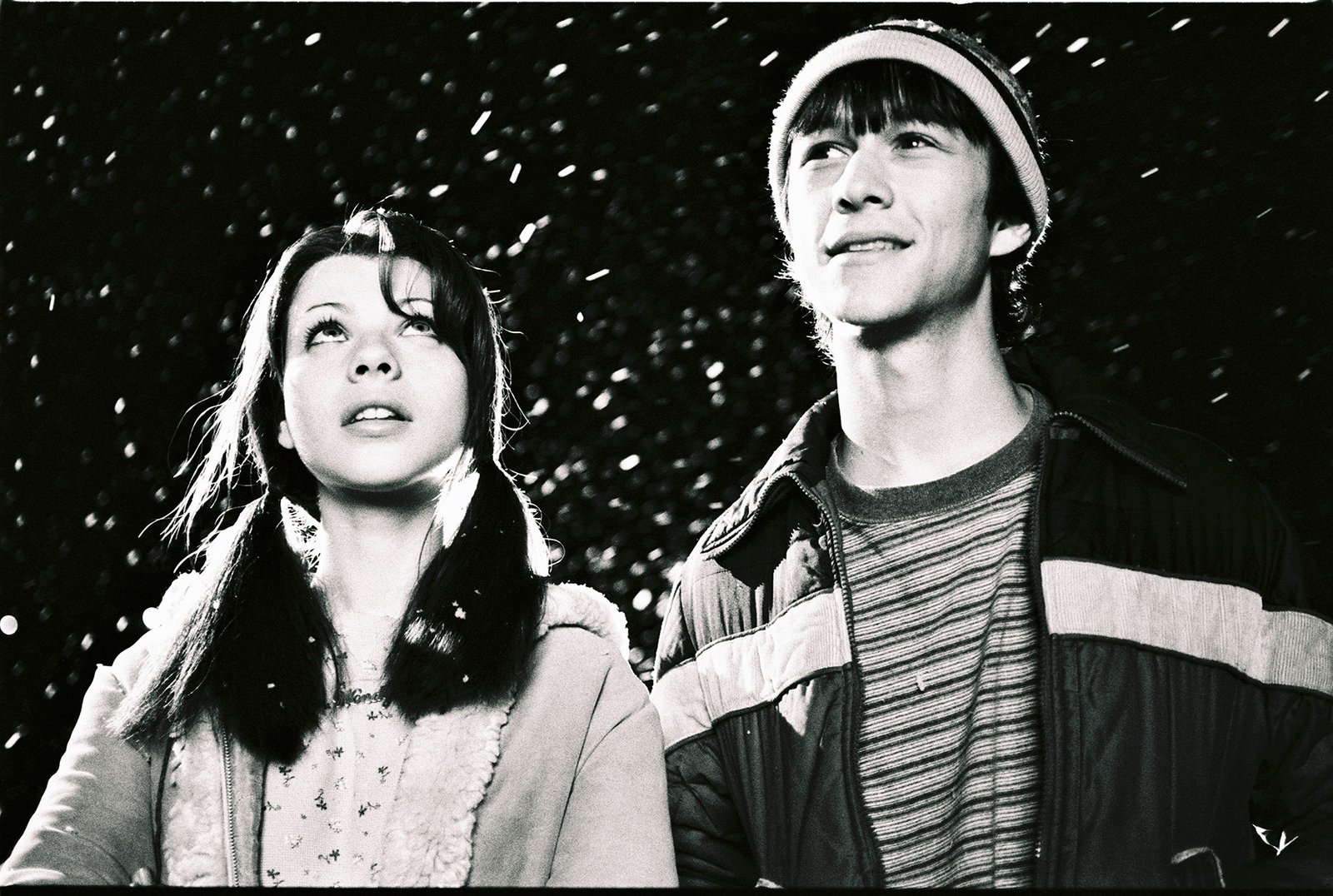
So, I watched Gregg Araki’s Mysterious Skin, an adaptation of a book of the same name written by Scott Heim. It was not the first film to challenge this concept in my head that certain things should not be portrayed in films, but it had been some time since I had observed a film oscillating between the heavy and the light so well. The weight that falls upon the shoulders of some of this film’s characters is greater than most people who watch it could understand, even as masters of empathy. And yet, as we watch Neil McCormick (Joseph Gordon-Levitt) and Brian Lackey (Brady Corbet) progressively lose themselves in a time that does not seem to move, we are with them (as the position of the camera continuously forces us to be) in their moments of doubt and anguish, static before the eternal presence of a long, long summer.
Throughout the entire film, Neil demonstrates an unusual reaction when receiving affection from the people he loves most. His mother and Wendy show him affection, and suddenly he seems to be a child again. He whispers a response, becomes embarrassed and almost confused. From what we see in the film, he was not lacking maternal love at home; his mother fills him with kisses whenever she sees him. She worries greatly about him, that is a fact. Wendy does too; she seems able to curl herself into an area inside Neil filled with thorns, where he waits for her to wrap him in a warm, bloodless embrace. We are revealed, however, that Neil seemed to keep his childhood coach in a confused space within himself, where they understood each other and “loved each other” truly, too. It is as if his former coach moved soundlessly between all the rooms with all the men he sleeps with — a “ghost,” as he describes him at the end of the film. We find ourselves fixed upon a grown child who cannot come to terms with the side of himself that, at the time, lived and remained within the situation. How guilty he feels, how wrong, how immobile. Sex becomes his mother tongue in the years that follow, speaking and moving between worlds of adults that should embrace him, but only feed the smoke of his innocence that burns the black of the black. This conflict between his idea of what was happening when he was a child and reality — the horrific, continuous abuse by his coach — is explored in ways that seek to add to the silence between words the most adorned melody, like the funeral march of innocence.
While watching the film, I realized the qualities of a director who understands the dangers of his work being able to shock in order to hide that it has nothing to say about anything. Mysterious Skin carries the weight of Heim’s story with excellence, demonstrating a technique that surpasses the technical of the film: delicacy. The film does not hesitate in pity, does not look at them with a gaze that only makes them grow more distant from the world, that makes them feel small forever. Araki shocks them, shows the spectator a grotesque reality and makes them face it even after the image has already been engraved in their heads, but in his surgeon’s hands he holds the baton that acts as a scalpel, separating the rotten dance of a black tongue from the rest of the body, this saline soil where flowers are more stubborn to bloom. He demonstrates an affection for the characters and their sufferings, making them grow in parts they believed had been cut away forever.
Leave a Reply